Industrial desulfurization based on IGF technology
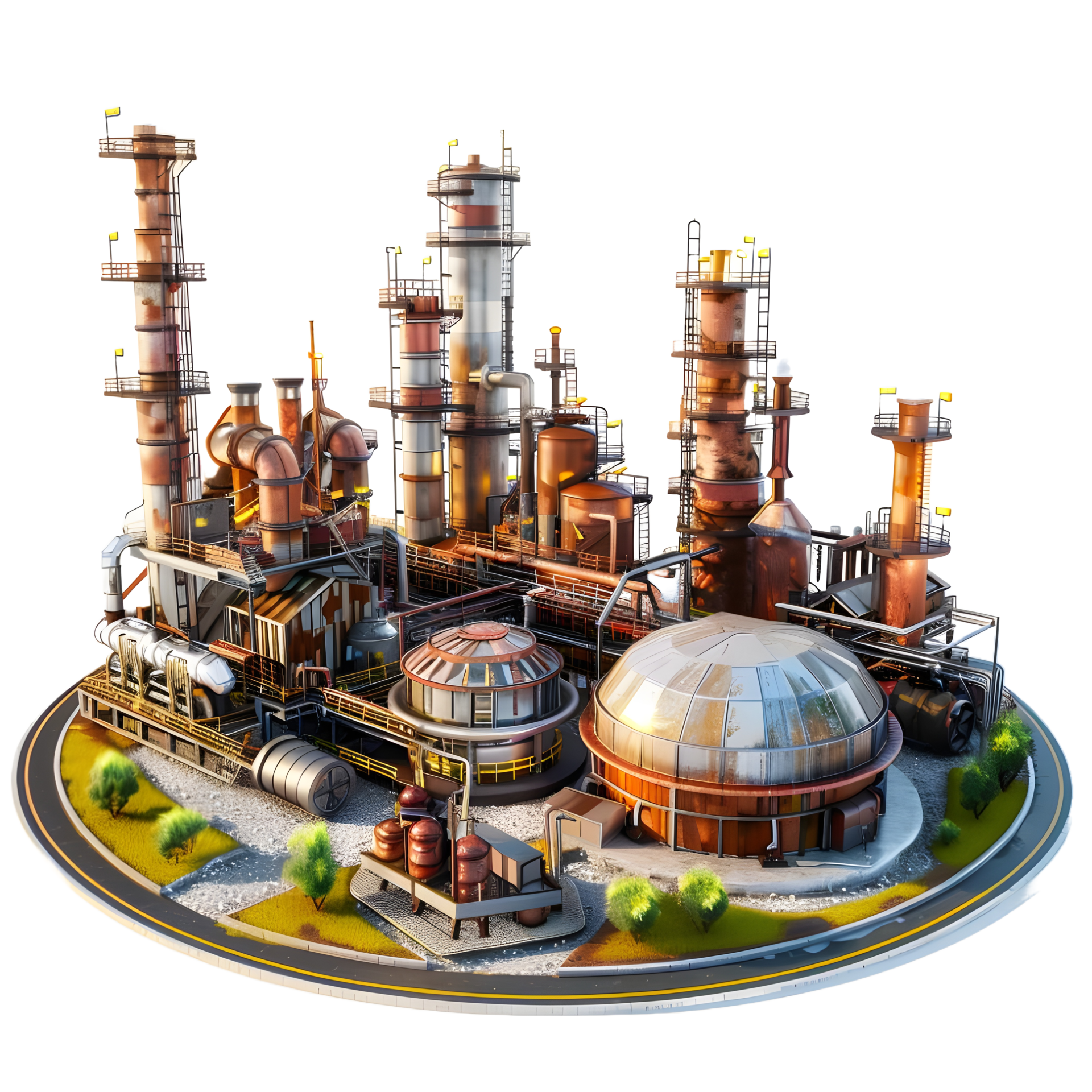
In the oil, gas, and petrochemical industries, controlling contaminants—such as dispersed oils, organic matter, and suspended solids—and enhancing process stream quality play a pivotal role in boosting productivity, minimizing environmental impact, and ensuring operational sustainability. Leveraging expertise in process engineering, advanced equipment design, and cutting-edge separation technologies, Farayand Gostar Kimia Aras Company provides specialized solutions based on Induced Gas Flotation (IGF) technology for industrial applications.
IGF technology operates by generating and distributing fine gas bubbles within a liquid stream; these bubbles attach to oil droplets, hydrocarbons, and suspended particles, carrying them to the surface to facilitate a highly efficient separation process. This technology is a well-established method for treating contaminated streams across the oil, gas, refining, and petrochemical sectors.
How does IGF technology work?
In Induced Gas Flotation (IGF) systems, gas is introduced into the liquid phase via mechanical or hydrodynamic equipment and converted into fine bubbles. These bubbles attach to oil droplets, hydrocarbons, and suspended particles, effectively reducing their density. Subsequently, the particles rise to the surface along with the bubbles and are collected by skimming systems.
This mechanism enables the IGF system to perform separation operations with high efficiency and adequate residence time, all within a compact footprint.
Farayand Gostar Kimia Aras designs IGF systems based on the specific requirements of each industrial unit, employing an engineering-driven approach and a precise analysis of operational conditions.
During the design process, the following parameters undergo expert evaluation:
Inlet flow rate and operational capacity
Physical and chemical properties of the fluid
Oil and suspended solids content
Process pressure and temperature
Hydraulic retention time
Gas injection rate
Bubble size and distribution
Expected separation efficiency
This approach ensures that every IGF system is fully customized and tailored to the plant’s actual operating conditions.
Why is IGF technology a smart choice for the petrochemical industry?
✅ Enhanced oil and hydrocarbon removal efficiency
✅ Reduced pollutant load entering downstream treatment units
✅ Smaller equipment footprint compared to certain traditional methods
✅ Improved operational stability of treatment units
✅ Reduced maintenance and operating costs
✅ Suitability for the demanding operating conditions of the oil and petrochemical industries
Due to their ability to remove oil and suspended solids, IGF systems are widely used in refineries, petrochemical complexes, and process units.
Specialized Capabilities of Farayand Gostar Kimia Aras
From engineering studies to industrial implementation
The company’s services regarding IGF technology include:
Process studies
Analysis of feed and contaminated streams
Selection of appropriate technology
Process calculations
Engineering design
Design of IGF equipment
Sizing and capacity determination
Design of auxiliary systems
Performance simulation and analysis
Flow behavior analysis
Mass transfer and separation analysis
Optimization of operating parameters
Farayand Gostar Kimia Aras: A Forward-Looking Industrial Engineering Partner
In industrial projects, selecting the right technology goes beyond merely purchasing equipment; it requires process expertise, design experience, and a deep understanding of operational conditions.
By combining engineering knowledge, advanced simulation technologies, and a problem-solving approach, Farayand Gostar Kimia Aras is prepared to deliver specialized solutions for IGF systems, industrial stream treatment, the optimization of separation processes, and performance enhancement for petrochemical units.